
The Evolution of Mobile Technology
Discover the journey of mobile tech, from bulky bricks to today’s sleek smartphones. Explore how mobile evolution has revolutionized our digital world
Introduction:
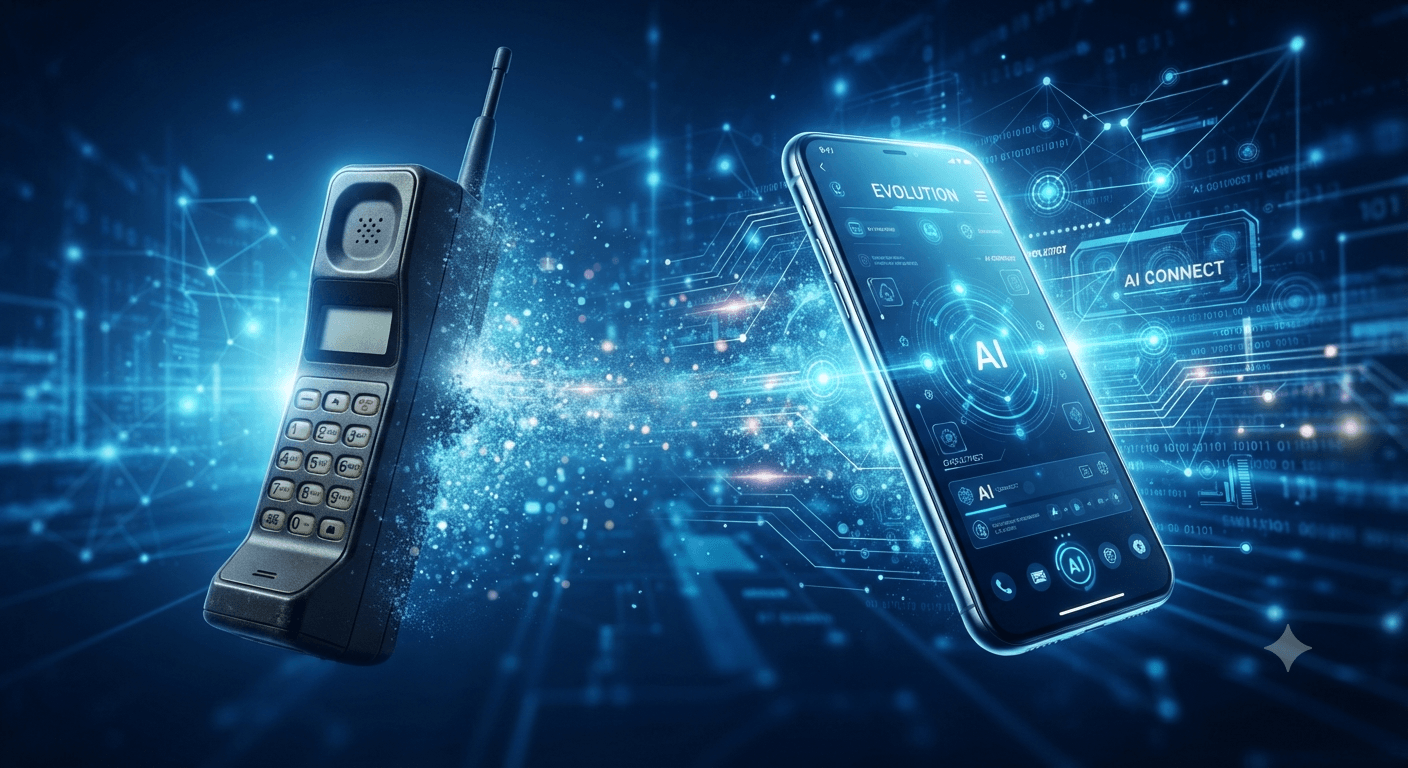
The history of mobile technology has been nothing short of a revolution. From the heavy, "brick-like" devices of the early 1980s to the AI-powered smartphones of 2026, the evolution of smartphones has fundamentally changed how we live, work, and communicate. In this article, we will explore the mobile technology timeline that transformed the world.
The Dawn of Mobile Connectivity (1973–1990s)
The journey of mobile phone history began in 1973 when Martin Cooper of Motorola made the first handheld mobile phone call. However, it wasn't until the 1980s that the Motorola DynaTAC 8000X became the first commercially available phone. At that time, mobile devices were luxury items meant only for business executives.
The Digital Shift: 2G and the Rise of SMS
In the 1990s, the introduction of 2G technology marked a major turning point. This allowed for digital voice calls and the birth of SMS (Short Message Service). This era made mobile phones accessible to the general public, setting the stage for the modern era of communication.
The Smartphone Era: When Technology Met Innovation (2007–2015)
The landscape changed forever in 2007 with the launch of the iPhone. It introduced a multi-touch interface that shifted the focus from physical keyboards to intuitive touchscreen displays. Following this, the rise of the Android operating system democratized technology, making high-powered smartphones affordable for the masses. This period solidified the evolution of smartphones as the primary gateway to the internet.
The AI and 5G Era: 2026 and Beyond
Today, in 2026, mobile technology is defined by Artificial Intelligence (AI) and lightning-fast connectivity. AI assistants are no longer just voice commands; they are predictive tools that manage our daily tasks, optimize battery life, and enhance photography through computational imaging. With 5G, the latency is almost zero, allowing for seamless cloud gaming and real-time remote collaboration.
Conclusion:
From simple voice calling devices to pocket-sized supercomputers, the history of mobile technology is a testament to human innovation. As we look forward, the integration of AR (Augmented Reality) and advanced AI will continue to push the boundaries of what these devices can achieve.
FAQ
Q: When did the first mobile phone call take place?